
The High-Altitude Narrative: Why Kenya’s Coffee Estates are the Next Frontier of Luxury
For the discerning traveler, the Kenyan narrative has long been dominated by the macro: the vast, sweeping horizon of the Maasai Mara, the thunderous migration of wildebeest, and the dramatic silhouetting of acacia trees against an equatorial dusk. It is a story of wildlife, adrenaline, and the grand spectacle of the savannah.
Yet, there is a second, quieter story being written in the mist-covered foothills of Mount Kenya. It is a narrative of viticultural precision, applied not to grapes, but to the coffee cherry.
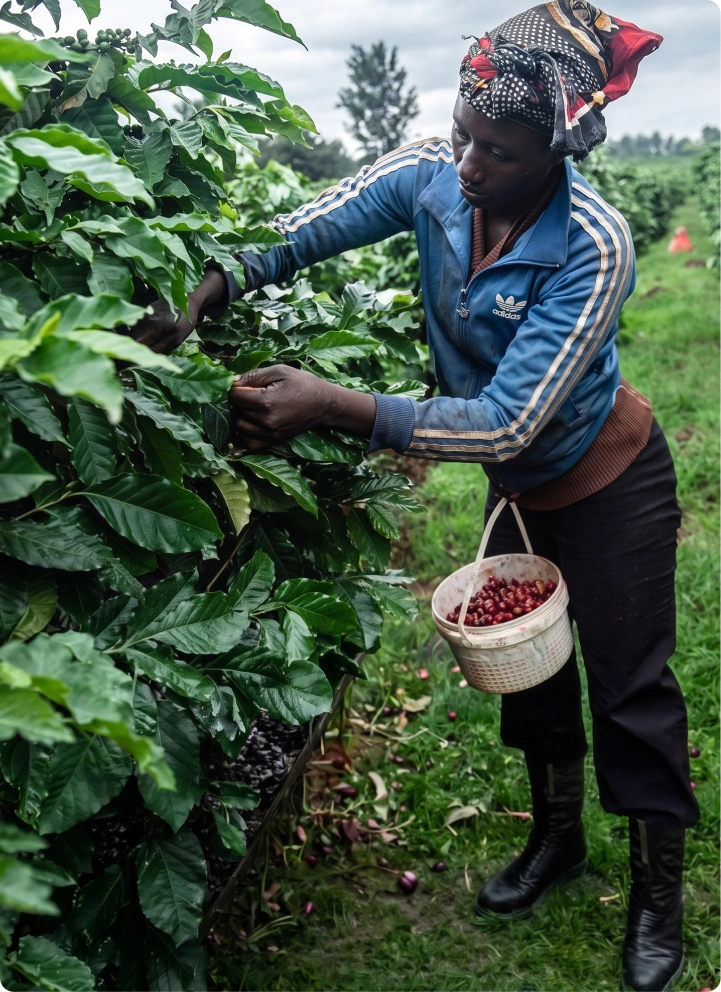
For the true connoisseur, the high-altitude regions of Kenya—specifically the areas surrounding Nyeri, Kirinyaga, and Embu—offer more than just a morning ritual. They offer a masterclass in terroir. As we see a shift in luxury travel from the "spectacle" to the "substantive," these estates are rapidly becoming essential waypoints for the traveler who seeks to understand the DNA of a destination.The Science of the Cup: Understanding Provenance
To appreciate Kenyan coffee is to engage with one of the most rigorous agricultural environments on earth. At altitudes ranging from 1,500 to 2,100 meters, the coffee trees are subjected to distinct diurnal temperature shifts—warm days and cool nights—which slow the maturation of the cherry. This physiological stress is the secret to the cup’s intensity.
The region is famous for two specific botanical varietals: SL28 and SL34. These are not mere crops; they are the heritage cultivars that established Kenya’s reputation. SL28, developed in the 1930s, is prized for its blackcurrant and citrus acidity, a vibrant profile that can often mirror the elegance of a fine Pinot Noir. SL34, often grown at slightly lower elevations, contributes a heavier, syrupy body and a complex, wine-like depth.
Beyond the plant, the luxury is in the alchemy of the process. Kenya’s "double fermentation" washing method is a labor-intensive, time-sensitive practice that strips the mucilage with surgical precision, resulting in a cup clarity that is unrivaled globally. For the guest who visits, this is not just agriculture; it is chemistry in motion. It explains why a cup of coffee here tastes like the geography itself: bright, acidic, clean, and profoundly articulate.The Estate Experience: Intimacy and Access
What, then, does a visit to these estates look like for the Aruna Africa traveler? It is a far cry from the utilitarian farm tour.
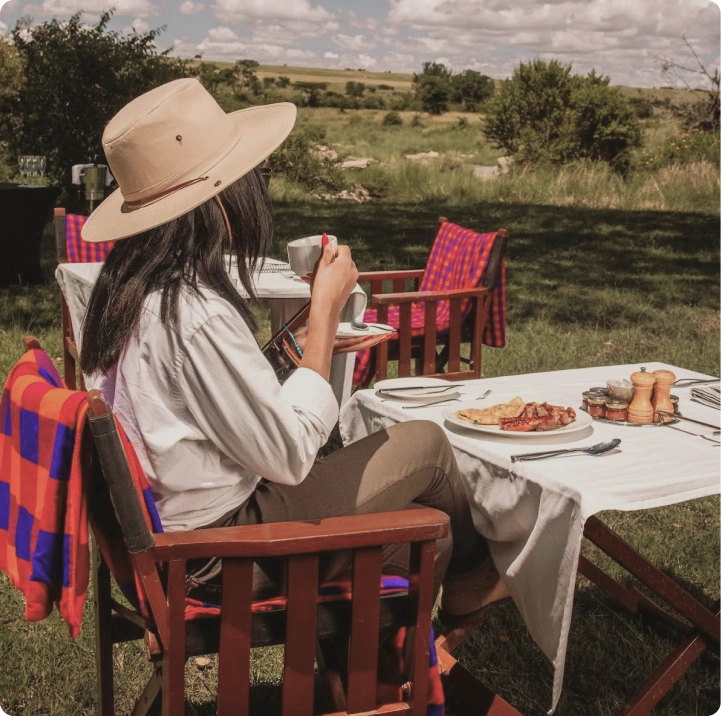
Imagine a private sunrise, not on a game drive, but on the terrace of an estate manor, surrounded by the scent of jasmine and ripening coffee blossoms. The experience begins with a walk through the plantation. You are accompanied not by a guide, but by the estate’s master agronomist. They will show you the specific volcanic Andosols (red-rich volcanic soil) that lend the beans their signature phosphorus and potassium profile.
The highlight of such a day is the private cupping session. In a dedicated lab—often housed in a beautifully restored colonial-era building or a cutting-edge, biophilic structure—you engage in the ritualized sensory analysis of the latest harvest. You are taught to identify the "notes" that define the region: the hint of dark chocolate, the floral jasmine aromatics, and that signature, crystalline acidity. It is an exercise in mindfulness, forcing the traveler to slow down and focus on the micro-details of flavor, contrasting sharply with the macro-scale drama of the safari.
These estate visits are intimate. They offer a rare window into the lives of the growers and processors who manage this delicate ecosystem. You are not a spectator; you are a participant in a conversation about trade, resilience, and the fragile intersection of global market demands and local sustainability.The New Architecture of Travel
This integration of agriculture into the luxury itinerary is reflective of a deeper, tectonic shift in our industry. Modern luxury is no longer about accumulation; it is about depth of understanding.
When you spend a day at a coffee estate, you gain a perspective on Kenya that the typical itinerary misses. You see the nexus of climate change and local adaptation; you see the economics of youth entrepreneurship; you see how global sustainability standards are actually implemented on the ground, rather than just debated in boardrooms.
For the Conservation Patron or the Architectural Explorer, these estates represent the pinnacle of "impact immersion." You leave with more than just a bag of premium beans; you leave with a comprehensive understanding of the landscape that produced them.
Kenya’s coffee highlands offer a duality that is increasingly rare in global travel. They provide the refined, human-centric comfort of a grand estate, yet they remain tethered to the wild, rugged heart of the country. They are a reminder that the greatest journeys are defined not by the ground we cover, but by the perspective we gain.
In the future, the most thoughtful journeys through East Africa will be those that balance the wild with the cultivated—the roar of the lion with the quiet, complex, and utterly extraordinary ritual of the morning roast. It is, perhaps, the most authentic way to taste the true flavor of Kenya.